

The Strait of Hormuz Blockade and Its Global Market Effects
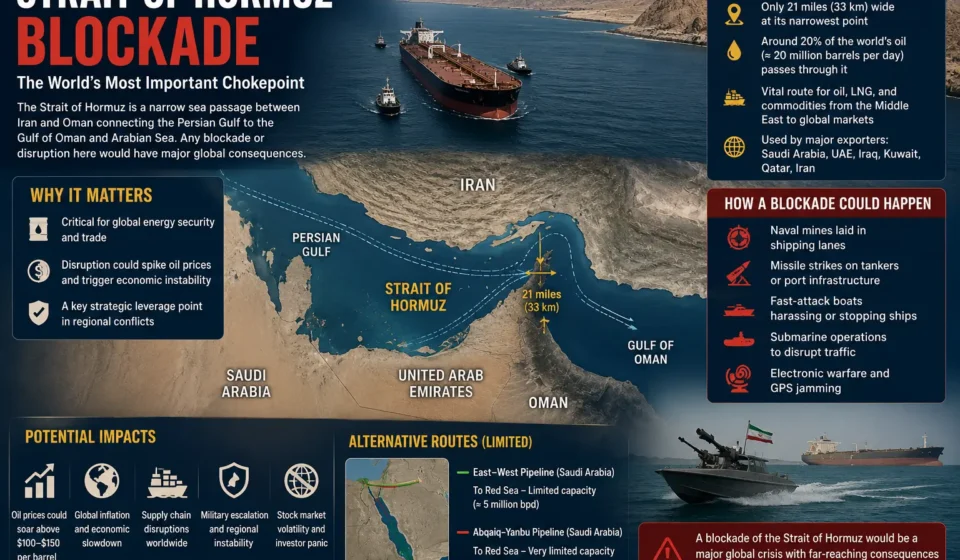
Thepunditreport.com – Geopolitical tension in the Middle East has long been a source of anxiety for international financial markets. However, the operational blockade of the Strait of Hormuz has shifted these abstract anxieties into severe, concrete market shocks. As the world’s most critical maritime energy chokepoint, any prolonged disruption to this narrow waterway sends waves through global trade infrastructure.
Understanding the deep financial and logistical connection between this maritime pass and the global economy highlights why this crisis is far more than a localized dispute. The economic shockwaves affect everything from retail consumer prices to corporate manufacturing lines across the globe.
The Strategic Importance of the Strait of Hormuz
To grasp the magnitude of a shipping blockade in this region, one must look at the volume of trade flowing through its waters. The Strait of Hormuz connects the oil-producing states of the Persian Gulf with the wider global market. Historically, roughly a quarter of the world’s seaborne crude oil and petroleum liquids, alongside nearly a fifth of global liquefied natural gas (LNG), transits through this single corridor.
Because alternative land-based pipelines offer nowhere near the scale required to bypass the waterway entirely, the strait effectively dictates the flow of global energy supplies. When this gateway closes or becomes too dangerous for commercial passage, the physical math of global supply and demand breaks down instantly.
How the Blockade Triggered Global Energy Crises
The immediate and most visible consequence of maritime disruptions in the strait is a massive spike in global energy prices. Energy markets price their products based on future availability, meaning even the threat of prolonged closures sends shockwaves through trading floors.
When commercial tanker traffic drops to near zero, Brent crude prices routinely surge past key psychological barriers. This impact is disproportionately borne by major energy-importing economies in Asia and Europe, which rely heavily on direct Gulf shipments. The price spikes extend beyond raw crude oil to affect refined products such as diesel, gasoline, and jet fuel, causing operational expenses for transport networks worldwide to soar.
Supply Chain Volatility and Soaring Maritime Costs
The market shockwaves are not confined strictly to the energy sector; they actively paralyze international shipping and logistical networks. When the strait becomes commercially unusable, the physical mechanics of global shipping are thrown into disarray.
-
Skyrocketing Insurance Premiums: Maritime insurance companies quickly cancel standard coverage for vessels entering high-risk areas. The cost of specialized war-risk insurance premiums can surge multiple times over within a matter of days, making transit financially unviable for many operators.
-
Prolonged Rerouting Delays: Shipping companies are forced to alter their schedules, sending massive cargo fleets on alternative journeys around the Cape of Good Hope. This detour adds substantial time to voyages, tying up capital and delaying critical factory inputs.
-
Equipment Shortages: Because container ships spend more time at sea, empty containers cannot accumulate at transit hubs at their normal pace. This creates a severe shortage of physical equipment on completely unrelated trade routes, driving up container freight rates globally.
Broader Macroeconomic Damage and Inflationary Pressures
As high energy costs and freight inflation persist, these micro-level logistics expenses inevitably filter down to ordinary businesses and everyday consumers. This Strait of Hormuz dynamic functions as a direct trigger for global cost-of-living pressures.
Higher oil prices directly increase the production cost of chemical fertilizers, which depend heavily on natural gas and regional inputs. When fertilizer prices spike, agricultural operating costs rise worldwide, translating into higher food prices and worsened food insecurity in vulnerable nations. Furthermore, the combined weight of increased shipping rates and fuel costs forces central banks to maintain restrictive monetary policies to combat stubborn inflation, pulling down overall economic growth expectations.
The Complicated Path to Regional Market Recovery
Even when diplomatic breakthroughs yield initial agreements to reopen blocked waters, global markets do not recover overnight. Restoring commercially credible traffic to a contested waterway is a slow, multi-phase process.
The physical presence of sea hazards, drone debris, and damaged infrastructure means that specialized clearing operations must take place before commercial fleets feel safe returning to normal routes. Furthermore, maritime insurance providers require prolonged periods of stability before lowering their risk premiums back to pre-crisis levels. Until total safety is proven, supply chains will remain structurally altered, and a lingering premium will continue to influence global market transactions.
Key Takeaway: The structural closure of the Strait of Hormuz acts as a direct transmission belt between regional geopolitical conflict and the wider global economy. True stabilization will require long-term diplomatic assurances and a complete restoration of maritime security before international trade flows can return to normal.
This Article Brought To You By: https://www.ez96live.com/
