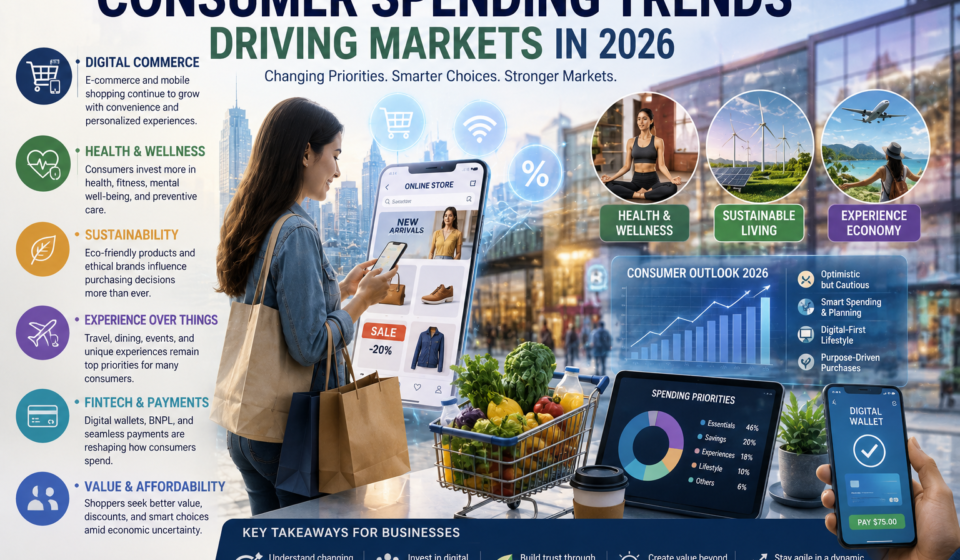

Consumer Spending Trends Driving Markets in 2026 – Consumer spending remains one of the most powerful forces shaping the global economy in 2026. In many countries, household consumption accounts for a significant share of economic activity, influencing business performance, employment, investment, and financial markets. As consumer behavior evolves in response to economic conditions, technological innovation, demographic changes, and shifting priorities, businesses and investors are paying close attention to emerging spending patterns.
The consumer landscape in 2026 is defined by a combination of caution and opportunity. While inflation concerns and higher living costs continue to affect household budgets, strong labor markets, digital innovation, and changing lifestyle preferences are creating new areas of demand. Understanding the latest consumer spending trends is essential for companies seeking growth and investors looking to identify opportunities in a rapidly changing marketplace.
Why Consumer Spending Matters
Consumer spending is a major driver of economic growth.
When households purchase goods and services, businesses generate revenue, hire workers, invest in expansion, and contribute to overall economic activity. Strong consumer demand often supports corporate earnings and financial markets, while weaker spending can signal economic slowdowns.
Consumer expenditures influence numerous sectors, including:
- Retail
- Technology
- Travel and tourism
- Housing
- Healthcare
- Entertainment
- Transportation
- Financial services
Because of its broad economic impact, consumer spending is often viewed as a key indicator of economic health.
Inflation Continues to Shape Spending Decisions
Although inflation has moderated in many regions compared to earlier years, higher prices remain an important factor influencing consumer behavior in 2026.
Many households continue to face increased costs for:
- Food
- Housing
- Utilities
- Insurance
- Transportation
- Healthcare
As a result, consumers are becoming more selective about where and how they spend their money.
Value-conscious purchasing remains a dominant trend. Shoppers are increasingly comparing prices, seeking discounts, using loyalty programs, and prioritizing products that offer long-term value.
Businesses that can demonstrate affordability while maintaining quality are often better positioned to attract customers.
Consumers Prioritize Essential Spending
Economic uncertainty has encouraged many households to focus more heavily on essential purchases.
Categories that continue to receive strong consumer support include:
- Groceries
- Healthcare
- Housing-related expenses
- Utilities
- Education
- Basic transportation
Discretionary spending remains active but tends to be more carefully evaluated.
Consumers are increasingly asking whether purchases align with their financial priorities and long-term goals.
This shift is influencing product development, pricing strategies, and marketing campaigns across industries.
Digital Commerce Continues to Expand
E-commerce remains one of the most important consumer spending trends in 2026.
Online shopping has become deeply integrated into everyday life, offering convenience, price transparency, and access to a wider range of products.
Consumers increasingly use digital channels for:
- Retail purchases
- Grocery orders
- Financial services
- Healthcare consultations
- Travel bookings
- Entertainment subscriptions
Businesses continue investing in digital platforms, mobile applications, and personalized online experiences to meet evolving customer expectations.
The distinction between online and offline commerce is becoming less significant as omnichannel shopping experiences gain popularity.
Artificial Intelligence Influences Consumer Behavior
Artificial intelligence is transforming both the shopping experience and consumer decision-making.
Retailers are using AI to:
- Personalize product recommendations
- Improve customer service
- Optimize inventory management
- Enhance pricing strategies
- Forecast demand
Consumers increasingly interact with AI-powered tools when researching products, comparing options, and making purchasing decisions.
AI-driven personalization helps businesses deliver more relevant experiences while improving conversion rates and customer satisfaction.
As AI adoption grows, its influence on consumer spending patterns is expected to expand significantly.
Experience-Based Spending Remains Strong
Despite economic pressures, consumers continue to prioritize experiences.
Many individuals are allocating a larger share of their budgets toward:
- Travel
- Entertainment
- Dining
- Events
- Wellness activities
- Personal development
This trend reflects changing attitudes toward consumption.
Rather than focusing solely on material goods, many consumers place greater value on experiences that create memories, improve well-being, or enhance quality of life.
Businesses operating in experience-driven sectors continue to benefit from this shift in consumer preferences.
The Growth of Health and Wellness Spending
Health and wellness remain major priorities for consumers worldwide.
Growing awareness of physical and mental well-being is influencing spending across multiple categories.
Popular areas include:
- Fitness programs
- Nutritional products
- Mental health services
- Preventive healthcare
- Wearable technology
- Wellness travel
Consumers increasingly view health-related purchases as investments rather than discretionary expenses.
This trend is creating opportunities for companies offering products and services that support healthier lifestyles.
Sustainability Influences Purchasing Decisions
Environmental awareness is playing a larger role in consumer behavior.
Many consumers are considering sustainability when evaluating products and brands.
Factors influencing purchasing decisions include:
- Sustainable sourcing
- Eco-friendly packaging
- Ethical labor practices
- Carbon footprint reduction
- Product durability
Younger consumers, in particular, often demonstrate strong interest in supporting companies that align with their environmental values.
While price remains an important consideration, sustainability is becoming an increasingly influential factor in brand selection.
Premium and Value Segments Both Thrive
An interesting trend in 2026 is the simultaneous growth of premium and value-oriented products.
Some consumers continue seeking premium experiences and high-quality products, particularly in categories they consider important.
Others focus heavily on affordability and cost savings.
This creates a bifurcated market where both premium and budget brands can succeed.
Companies must clearly understand their target audiences and position their offerings accordingly.
Businesses that attempt to appeal to everyone often struggle to differentiate themselves in increasingly competitive markets.
Subscription-Based Consumption Expands
Subscription models continue gaining popularity across various industries.
Consumers increasingly subscribe to:
- Streaming services
- Software platforms
- Fitness programs
- Meal delivery services
- Membership communities
- Educational content
Subscriptions offer convenience and predictable access to products and services.
For businesses, recurring revenue models provide greater stability and improved customer retention opportunities.
As competition increases, companies are focusing on delivering clear value to justify ongoing subscription costs.
Demographic Changes Shape Consumer Markets
Population trends are influencing spending behavior around the world.
Different generations often prioritize different products, services, and experiences.
Younger Consumers
Younger generations tend to embrace:
- Digital technologies
- Sustainable products
- Experience-based spending
- Flexible consumption models
Older Consumers
Aging populations contribute to increased demand for:
- Healthcare services
- Financial planning
- Home improvement
- Travel and leisure activities
Understanding demographic shifts is becoming increasingly important for businesses seeking long-term growth.
Consumer Confidence and Economic Sentiment
Consumer confidence remains a critical factor affecting spending activity.
When consumers feel optimistic about:
- Employment prospects
- Income growth
- Economic stability
they are generally more willing to make significant purchases.
Conversely, uncertainty regarding economic conditions can encourage saving and reduce discretionary spending.
Businesses and investors closely monitor consumer confidence indicators because they often provide early signals regarding future economic activity.
Consumer sentiment can influence markets long before actual spending data reflects changing conditions.
Housing Costs Affect Spending Patterns
Housing remains one of the largest household expenses.
Higher mortgage rates, rental costs, and property-related expenses continue to affect consumer budgets in many regions.
When housing costs rise:
- Disposable income may decline.
- Spending priorities can shift.
- Savings rates may decrease.
- Demand for discretionary goods may weaken.
The relationship between housing affordability and consumer spending remains an important factor influencing broader economic trends.
Social Commerce Gains Momentum
Social media platforms are becoming increasingly important shopping channels.
Consumers now discover, evaluate, and purchase products directly through social platforms.
Social commerce combines:
- Product discovery
- Influencer marketing
- Customer reviews
- Direct purchasing functionality
This trend is particularly popular among younger consumers who spend significant time on digital platforms.
Businesses are investing heavily in social commerce strategies to engage customers and drive sales.
Financial Technology Changes Spending Habits
Financial technology innovations continue reshaping consumer behavior.
Digital payment systems, mobile wallets, buy-now-pay-later services, and online banking platforms make transactions faster and more convenient.
Benefits include:
- Improved accessibility
- Faster payments
- Enhanced budgeting tools
- Greater financial flexibility
As fintech adoption expands, consumers gain more control over spending decisions and financial management.
Businesses that offer seamless payment experiences often gain competitive advantages.
Globalization and Consumer Choice
Global connectivity has expanded access to products and services from around the world.
Consumers can now compare offerings across markets and purchase goods from international retailers more easily than ever before.
This increased competition benefits consumers by:
- Expanding product selection
- Encouraging innovation
- Supporting price competition
At the same time, businesses face greater pressure to differentiate themselves and deliver superior customer experiences.
What Businesses Should Watch in 2026
Companies seeking to understand future spending trends should monitor:
- Inflation developments
- Employment conditions
- Consumer confidence levels
- Interest rate changes
- Technological adoption
- Demographic shifts
- Sustainability preferences
These factors will continue influencing purchasing behavior and market opportunities throughout the year.
Businesses that adapt quickly to changing consumer expectations are more likely to achieve long-term success.
The Future of Consumer Spending
Looking ahead, consumer spending is expected to become increasingly influenced by technology, personalization, sustainability, and economic conditions.
Several trends are likely to continue shaping markets:
- Greater AI integration
- Expanded digital commerce
- Increased health and wellness spending
- Stronger demand for sustainable products
- Continued growth in experience-based consumption
- More personalized customer experiences
Companies that understand these trends and align their strategies accordingly will be better positioned to capture future demand.
Conclusion
Consumer spending trends in 2026 reflect a marketplace undergoing significant transformation. While inflation, housing costs, and economic uncertainty continue to influence household budgets, consumers remain active and adaptable. Digital commerce, artificial intelligence, sustainability, wellness, and experience-based spending are reshaping purchasing behavior across industries.
For businesses, understanding these evolving preferences is essential for maintaining competitiveness and driving growth. For investors, consumer spending patterns provide valuable insights into economic conditions and emerging market opportunities.
As technology advances and consumer expectations continue to evolve, spending behavior will remain one of the most important forces shaping markets and the global economy in the years ahead.