
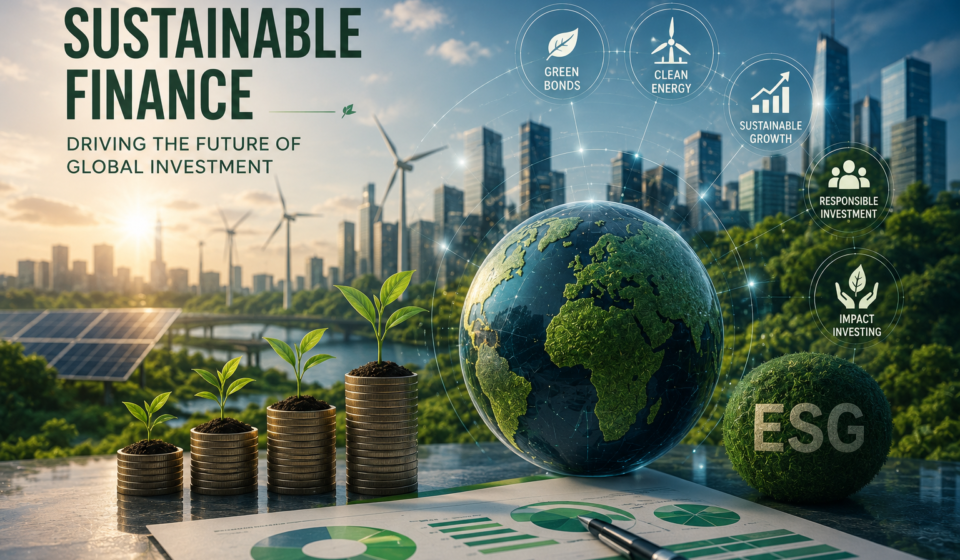

Sustainable Finance: Driving the Future of Global Investment – In recent years, sustainable finance has moved from a niche investment strategy to a central pillar of the global financial system. As climate change, social inequality, and corporate governance concerns become increasingly important, investors, businesses, and governments are recognizing the need to align financial decisions with long-term sustainability goals.
Sustainable finance is no longer simply about ethical investing. It has become a powerful tool for managing risk, identifying growth opportunities, and supporting economic development. From green bonds and renewable energy projects to environmental, social, and governance (ESG) investing, sustainable finance is reshaping how capital is allocated around the world.
As the global economy faces significant environmental and social challenges, sustainable finance is emerging as a key driver of innovation, resilience, and long-term investment success.
What Is Sustainable Finance?
Sustainable finance refers to financial activities that consider environmental, social, and governance factors alongside traditional financial metrics. The goal is to generate long-term economic value while supporting sustainable development.
Unlike traditional investing, which often focuses primarily on short-term financial returns, sustainable finance evaluates how investments impact society and the environment over time.
Examples of sustainable finance include:
- Green bonds that fund renewable energy projects
- ESG-focused investment funds
- Sustainable infrastructure financing
- Climate risk management strategies
- Social impact investing
- Corporate sustainability-linked loans
By incorporating sustainability considerations into investment decisions, financial institutions can help address global challenges while potentially enhancing long-term returns.
The Rise of ESG Investing
One of the most significant developments in sustainable finance has been the growth of ESG investing.
ESG stands for Environmental, Social, and Governance factors:
Environmental
Environmental criteria evaluate a company’s impact on the natural world. This includes carbon emissions, energy efficiency, waste management, water conservation, and climate-related risks.
Social
Social factors focus on relationships with employees, customers, communities, and stakeholders. Issues such as workplace diversity, labor practices, human rights, and customer protection fall into this category.
Governance
Governance examines corporate leadership, board independence, transparency, executive compensation, and ethical business practices.
Investors increasingly use ESG metrics to assess whether companies are well-positioned for long-term success in a rapidly changing world.
Why Sustainable Finance Is Growing
Several powerful trends are driving the rapid expansion of sustainable finance worldwide.
Climate Change Concerns
Climate change presents significant economic risks. Extreme weather events, rising sea levels, resource shortages, and regulatory changes can impact businesses across nearly every sector.
Investors are increasingly seeking companies that are prepared for a low-carbon future and capable of adapting to environmental challenges.
Regulatory Developments
Governments and regulators around the world are introducing policies designed to promote sustainability and improve transparency.
New disclosure requirements encourage companies to report environmental and social risks, helping investors make more informed decisions.
Consumer Expectations
Consumers are becoming more conscious of sustainability issues and increasingly prefer businesses that demonstrate responsible practices.
Companies that align with these expectations may benefit from stronger brand loyalty and competitive advantages.
Long-Term Risk Management
Many investors view sustainable finance as an effective way to identify and manage long-term risks that may not be reflected in traditional financial statements.
This broader perspective can improve investment decision-making and portfolio resilience.
Green Bonds and Sustainable Capital Markets
Green bonds have become one of the fastest-growing segments of sustainable finance.
These bonds are specifically issued to fund projects that provide environmental benefits, including:
- Renewable energy facilities
- Clean transportation systems
- Energy-efficient buildings
- Water infrastructure projects
- Climate adaptation initiatives
Governments, corporations, and development banks increasingly use green bonds to attract investors interested in supporting sustainability goals.
The growth of green bond markets demonstrates how financial innovation can mobilize large amounts of capital for environmentally beneficial projects.
In addition to green bonds, sustainability-linked bonds and social bonds are expanding investment opportunities across global capital markets.
Sustainable Finance and Renewable Energy
Renewable energy represents one of the most important areas receiving sustainable finance investment.
The transition from fossil fuels to cleaner energy sources requires substantial funding for:
- Solar power projects
- Wind energy developments
- Battery storage systems
- Smart electrical grids
- Electric vehicle infrastructure
Financial institutions play a crucial role in supporting this transition by providing capital to innovative energy companies and infrastructure projects.
As technology improves and renewable energy becomes increasingly cost-competitive, investment opportunities continue to expand.
Many analysts believe the global energy transition will remain one of the largest investment themes of the coming decades.
The Business Case for Sustainability
While sustainable finance is often associated with environmental goals, it also makes strong business sense.
Companies that prioritize sustainability may experience several advantages:
Improved Risk Management
Organizations that identify environmental and social risks early are often better prepared to handle disruptions and regulatory changes.
Operational Efficiency
Sustainable practices can reduce energy consumption, waste, and operating costs.
Access to Capital
Investors increasingly favor companies with strong sustainability performance, potentially improving access to financing.
Enhanced Reputation
Businesses that demonstrate responsible practices often enjoy stronger relationships with customers, employees, and stakeholders.
Innovation Opportunities
Sustainability challenges frequently drive innovation, creating new products, services, and market opportunities.
These benefits explain why sustainability is becoming integrated into corporate strategy rather than remaining a separate initiative.
Sustainable Finance in Emerging Markets
Emerging economies are playing an increasingly important role in sustainable finance.
Many developing countries face urgent needs related to:
- Infrastructure development
- Climate adaptation
- Clean energy expansion
- Water management
- Sustainable agriculture
Sustainable finance provides mechanisms for attracting investment to address these challenges while supporting economic growth.
International organizations, development banks, and private investors are increasingly directing capital toward projects that combine financial returns with positive environmental and social outcomes.
The growth of sustainable finance in emerging markets may help accelerate global progress toward development and climate objectives.
Challenges Facing Sustainable Finance
Despite its rapid growth, sustainable finance faces several challenges.
Lack of Standardization
Different organizations often use varying methodologies for measuring sustainability performance.
This can make it difficult for investors to compare companies consistently.
Greenwashing Concerns
Some organizations may exaggerate sustainability claims without making meaningful improvements.
Investors increasingly demand transparency and independent verification to ensure credibility.
Data Quality Issues
Reliable sustainability data is still developing in many markets.
Improving reporting standards remains a priority for regulators and investors.
Balancing Returns and Impact
Some investors continue to debate how to balance financial performance with environmental and social objectives.
However, growing evidence suggests that sustainability and profitability can often complement one another.
Addressing these challenges will be critical for maintaining confidence in sustainable finance markets.
Technology’s Role in Sustainable Finance
Technology is helping accelerate the adoption of sustainable finance.
Artificial intelligence, big data analytics, and advanced reporting systems enable investors to assess sustainability performance more accurately.
Digital platforms can track carbon emissions, monitor supply chains, and evaluate ESG risks in real time.
Fintech companies are also creating innovative tools that make sustainable investing more accessible to both institutional and retail investors.
As technology continues to evolve, it is likely to improve transparency, efficiency, and accountability across sustainable finance markets.
The Future of Global Investment
Sustainable finance is increasingly shaping the future direction of global investment.
Major asset managers, pension funds, insurance companies, and sovereign wealth funds are integrating sustainability into their investment strategies.
Governments are setting ambitious climate targets that require substantial private-sector investment.
Corporations are adopting sustainability commitments that influence business operations and capital allocation decisions.
As these trends continue, sustainable finance is expected to become a standard component of investment analysis rather than a specialized niche.
The shift reflects a growing recognition that long-term financial success depends on the health of economies, societies, and the environment.
Conclusion
Sustainable finance is transforming the global investment landscape by connecting financial performance with environmental and social responsibility. Through ESG investing, green bonds, renewable energy financing, and innovative sustainability initiatives, investors are helping drive positive change while pursuing long-term returns.
Although challenges such as standardization, data quality, and greenwashing remain, the momentum behind sustainable finance continues to strengthen. Governments, businesses, and financial institutions increasingly recognize that sustainable development and economic growth can work together rather than compete with one another.
As the world confronts climate change, resource constraints, and evolving social expectations, sustainable finance will play an essential role in directing capital toward solutions that create lasting value. For investors seeking resilience, opportunity, and long-term growth, sustainable finance is likely to remain one of the most influential forces shaping the future of global investment.
