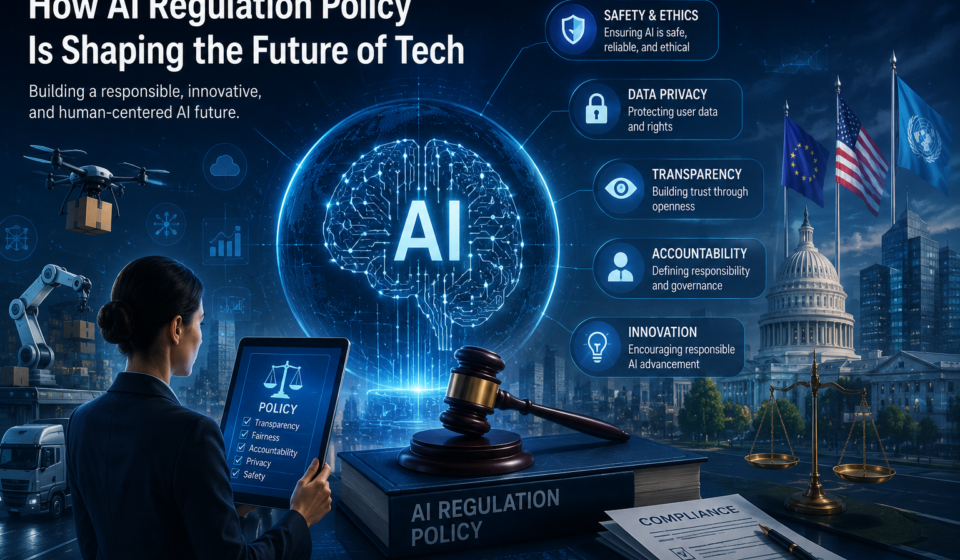

How AI Regulation Policy is Shaping the Future of Tech – As artificial intelligence continues to evolve at a rapid pace, the necessity for regulation becomes increasingly apparent. Currently, various AI regulation policies are being crafted and adopted across the globe. These policies aim to achieve several key objectives, primarily focused on the protection of user privacy, the ethical utilization of AI technologies, and the encouragement of innovation while simultaneously managing associated risks.
One of the most comprehensive frameworks is the European Union’s AI Act, which establishes criteria for categorizing AI systems based on their risk levels. It distinguishes between high-risk and low-risk applications, potentially setting stringent requirements for the former. This legislative approach reflects a proactive stance in ensuring that AI systems do not compromise fundamental rights or public interest, addressing concerns that have proliferated in response to the capabilities of AI technologies.
Conversely, the United States has approached AI regulation policy with a more decentralized strategy, focusing on voluntary guidelines rather than enforceable regulations. The U.S. aims to promote innovation while minimizing undue burdens on companies developing AI systems. This method intends to foster a competitive environment, encouraging startups and established companies alike to explore the capabilities of AI freely.
In Asia, countries like China and Japan are actively shaping their AI regulation policy, concentrating on harnessing AI’s potential for economic growth. China, for instance, has implemented guidelines that emphasize the importance of ethical use while also maintaining significant control over AI deployment in alignment with its national strategies.
The ongoing debate surrounding AI regulation policy underscores the challenge of balancing regulation with innovation. As policymakers navigate these waters, it remains essential to create frameworks that protect individuals and society without stifling the technological advancements that AI promises to deliver.
Impact of AI Regulation on Technology Companies
The introduction of artificial intelligence (AI) regulation policies has significant implications for technology companies, spanning from nascent startups to well-established tech giants. These regulations are designed to ensure ethical AI use and data protection, which require companies to re-evaluate their operational frameworks. For instance, compliance with AI regulations often necessitates the implementation of stricter data governance policies, enhanced security measures, and transparent algorithms, prompting companies to allocate resources and time into conforming to these emerging standards.
However, the adjustment to regulatory requirements may introduce challenges that could hinder innovation in the tech sector. Companies might face increased operational costs due to the investment needed for compliance-related technologies and personnel training. As a result, startups, particularly those with limited resources, may find it challenging to innovate swiftly while navigating the complex regulatory landscape. Nonetheless, it is crucial to note that these regulations can also act as a catalyst for new business opportunities. By fostering trust and safety in AI technologies, companies can differentiate themselves in a crowded market, appealing to increasingly conscientious consumers.
Case studies illustrate this dynamic vividly. For example, numerous technology firms have had to pivot their strategies to mitigate potential regulatory repercussions. One major tech giant initiated a comprehensive audit of its AI algorithms to ensure compliance with anticipated regulations, leveraging the situation to enhance its brand reputation as a leader in responsible AI practices. Conversely, smaller companies that embraced the regulations early adopted a proactive stance, transforming compliance into a competitive advantage by marketing their commitment to ethical AI use.
As AI regulation evolves, it is evident that technology companies must remain agile. They must navigate a landscape that poses both challenges and opportunities for growth. The future of tech rests in the balance of innovation and regulatory adherence, requiring companies to be forward-thinking in their approach to compliance and business development.
The Role of Stakeholders in Shaping AI Regulation Policy
The landscape of artificial intelligence (AI) regulation is significantly influenced by various key stakeholders, each playing a vital role in the development and implementation of regulatory frameworks. Government bodies and policymakers stand at the forefront, tasked with creating legislation that addresses the ethical implications and potential risks associated with AI technologies. These entities are responsible for enacting laws that ensure the safety, transparency, and accountability of AI systems, which are becoming increasingly integrated into daily life.
Tech companies also have a substantial influence on AI regulation, as they are often the primary developers of these technologies. Their involvement in shaping regulatory policy is critical, as they can provide insights into the technological capabilities and limitations of AI. Furthermore, many companies engage in self-regulatory practices and frameworks to demonstrate their commitment to ethical AI deployment, thereby contributing to a proactive regulatory approach.
Civil society organizations and advocacy groups play a crucial role in representing public interest and raising awareness about the societal implications of AI. They often voice concerns regarding issues such as data privacy, algorithmic bias, and the ethical use of AI. By engaging in public discourse and mobilizing community feedback, these organizations help shape a regulatory narrative that emphasizes human rights and ethical considerations.
Additionally, academic institutions contribute to the shaping of AI regulations through research and education. Scholars and researchers analyze the impacts of artificial intelligence on society, generate evidence-based insights, and propose frameworks that inform policymakers. The academic perspective is essential for understanding the long-term effects of AI and ensuring that regulations remain relevant amid rapid technological advancements.
The interplay of these stakeholders creates a dynamic environment for AI policy formation. It is essential that public opinion be considered throughout this process, as it can heavily influence regulatory outcomes. Moreover, international cooperation among nations is vital for establishing harmonized AI standards to address the global nature of technology. Continuous dialogue among all stakeholders will be necessary to strike a balance that fosters innovation while ensuring public safety and ethical compliance in the regulation of AI.
Future Trends and Predictions in AI Regulation Policy
As the landscape of artificial intelligence (AI) continues to evolve, so too does the corresponding regulatory framework. Future trends indicate a significant shift in how AI technologies will be governed, particularly as they become more integrated into daily life. Policymakers are likely to place greater emphasis on creating adaptive regulations that respond to the rapid pace at which AI innovations occur. This approach may involve the establishment of regulatory sandboxes, which would allow for testing new AI applications in a controlled environment to assess their implications before a broader rollout.
Moreover, the increasing complexity of AI systems—exemplified by advancements in machine learning and deep learning—requires a nuanced understanding of the technology by regulators. This may lead to the rise of interdisciplinary teams comprising technologists, ethicists, and legal experts working together to devise effective regulatory solutions. The integration of emerging technologies, such as blockchain, could also play a critical role in enhancing transparency and accountability within AI regulation policy systems. By leveraging the immutability of blockchain, stakeholders can ensure that AI models are ethically sourced and operated, establishing a foundation of trust that is currently lacking.
Additionally, the global nature of technology presents both opportunities and challenges concerning regulatory harmonization. As different countries adopt varied approaches to AI regulation, the risk of fragmented standards may emerge. Conversely, this divergence could spur international dialogue among nations to establish common guidelines or principles that govern AI use, fostering global cooperation. Such a framework would not only assist in addressing ethical considerations but also ensure that competitive advantages of AI technologies are fairly distributed. Ultimately, the trajectory of AI regulation policy will hinge upon the delicate balance of fostering innovation while safeguarding societal interests, shaping the future of technology in unforeseen ways.