
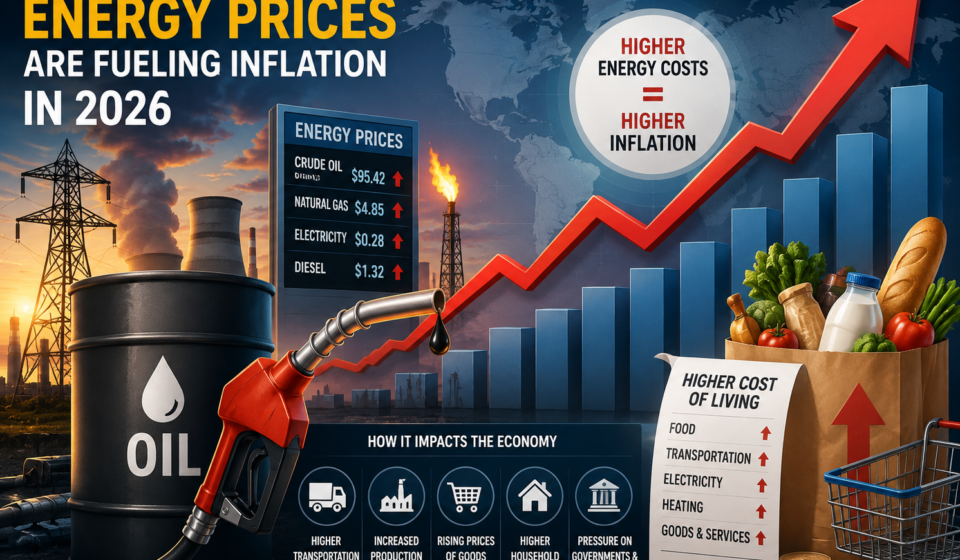

How Rising Energy Prices Are Fueling Inflation in 2026 – Energy prices have always played a critical role in shaping the global economy, but in 2026 their influence on inflation has become more significant than ever. From higher electricity bills and fuel costs to increased transportation expenses and manufacturing prices, rising energy costs are affecting nearly every aspect of economic activity.
As households and businesses face growing financial pressure, policymakers are struggling to balance economic growth with inflation control. The relationship between energy prices and inflation is complex, but understanding it is essential for consumers, investors, and decision-makers navigating today’s economic environment.
In 2026, energy markets remain one of the most important drivers of global inflation, influencing prices across industries and countries around the world.
Understanding the Connection Between Energy Prices and Inflation
Inflation refers to the general increase in the prices of goods and services over time. While inflation can be influenced by multiple factors, energy costs often act as a powerful catalyst.
Energy is a fundamental input for modern economies. Businesses require electricity, fuel, and other energy sources to manufacture products, transport goods, operate facilities, and provide services.
When energy prices rise significantly, businesses often face higher operating costs. To maintain profitability, many companies pass those costs on to consumers through higher prices.
This process contributes to broader inflationary pressures throughout the economy.
Why Energy Prices Are Rising in 2026
Several factors are contributing to elevated energy prices in 2026.
Geopolitical Tensions
Political instability in key energy-producing regions continues to create uncertainty in global oil and gas markets.
Conflicts, sanctions, trade restrictions, and diplomatic disputes can disrupt supply chains and limit energy exports, pushing prices higher.
Growing Global Demand
Economic growth in emerging markets is increasing demand for electricity, transportation fuels, and industrial energy consumption.
As more countries industrialize and urbanize, global energy demand continues to expand.
Supply Constraints
Many energy producers face challenges related to infrastructure, investment, environmental regulations, and production capacity.
Limited supply growth can create imbalances when demand increases rapidly.
Energy Transition Costs
The shift toward renewable energy sources requires substantial investment in new infrastructure.
While renewable technologies offer long-term benefits, the transition period can create temporary supply challenges and price volatility.
Together, these factors contribute to persistent upward pressure on energy costs.
The Direct Impact on Household Expenses
One of the most visible effects of rising energy prices is the increase in household living costs.
Consumers are paying more for:
- Electricity bills
- Natural gas services
- Home heating
- Air conditioning
- Fuel for personal vehicles
- Public transportation
As energy expenses consume a larger portion of household budgets, families have less disposable income available for other purchases.
This reduction in purchasing power is particularly difficult for lower-income households, which often spend a greater percentage of their income on essential energy needs.
The result is a higher cost of living and increased financial stress for millions of people worldwide.
Transportation Costs and Inflation
Transportation is one of the most energy-intensive sectors of the economy.
Trucks, ships, trains, and airplanes rely heavily on fuel to move goods from producers to consumers.
When fuel prices increase, transportation companies face higher operating expenses. These costs often ripple through supply chains and ultimately affect retail prices.
For example:
- Food transportation becomes more expensive.
- Imported goods cost more to deliver.
- E-commerce shipping fees may rise.
- Manufacturing supply chains become more costly.
Because transportation touches nearly every product sold in modern economies, rising fuel prices can have widespread inflationary effects.
Manufacturing and Production Challenges
Manufacturing industries are especially sensitive to energy costs.
Factories depend on electricity, natural gas, and industrial fuels to power equipment, maintain production lines, and operate facilities.
When energy prices increase, manufacturers often experience:
- Higher production costs
- Reduced profit margins
- Increased product prices
- Lower competitiveness
Industries such as chemicals, steel, cement, aluminum, and automotive manufacturing are particularly vulnerable because energy represents a significant portion of their operating expenses.
As these sectors raise prices to offset costs, inflation spreads throughout the economy.
Food Prices and Energy Costs
Food inflation is closely connected to energy markets.
Agriculture relies heavily on energy for:
- Farm machinery
- Irrigation systems
- Fertilizer production
- Food processing
- Refrigeration
- Transportation
When fuel and electricity prices rise, the cost of producing and delivering food increases as well.
Consumers may notice higher prices for groceries, restaurant meals, and packaged food products.
In many countries, food inflation has become one of the most visible consequences of rising energy costs, creating challenges for both households and policymakers.
The Role of Electricity Prices
Electricity prices have become an increasingly important inflation driver.
As economies become more digital and electrified, businesses depend on reliable power supplies to support operations.
Data centers, manufacturing plants, retail stores, healthcare facilities, and service providers all require substantial amounts of electricity.
When power generation costs rise due to higher fuel prices, infrastructure investments, or supply shortages, businesses often pass these expenses on to customers.
This contributes to inflation across a wide range of sectors beyond traditional energy markets.
Central Banks and Inflation Control
Central banks play a key role in responding to inflation.
When inflation rises significantly, policymakers often increase interest rates to slow economic activity and reduce price pressures.
However, energy-driven inflation presents unique challenges.
Unlike inflation caused by excessive consumer demand, energy price shocks originate from supply-side factors that are often beyond the control of central banks.
Higher interest rates may reduce spending and investment, but they cannot directly increase oil production or lower global energy costs.
As a result, policymakers must carefully balance inflation control with economic growth concerns.
The Global Impact of Energy Inflation
Energy inflation affects countries differently depending on their economic structures and energy resources.
Energy Importers
Countries that rely heavily on imported oil, natural gas, or coal often experience greater inflationary pressures when global prices rise.
Higher import costs can weaken currencies, increase trade deficits, and raise consumer prices.
Energy Exporters
Energy-producing nations may benefit from higher export revenues during periods of elevated prices.
However, even energy exporters can face inflation challenges if domestic prices rise rapidly or government subsidies become more expensive.
Developing Economies
Developing countries are often particularly vulnerable because energy and food represent a larger share of household spending.
Price increases can significantly impact living standards and economic stability.
These differences highlight the global nature of energy inflation and its uneven consequences.
Renewable Energy and Long-Term Solutions
Many experts believe renewable energy will play an important role in reducing future inflation risks.
Solar power, wind energy, battery storage, and smart grid technologies can help diversify energy sources and improve supply stability.
Benefits of renewable energy include:
- Reduced dependence on imported fuels
- Lower exposure to oil price volatility
- Improved energy security
- Potential long-term cost savings
- Lower carbon emissions
While the transition requires substantial investment, renewable energy may help create a more resilient and predictable energy system over time.
Governments and businesses worldwide are increasing investments in clean energy infrastructure as part of broader economic and climate strategies.
What Consumers Can Do
Although individuals cannot control global energy markets, they can take steps to reduce the impact of rising energy prices.
Practical strategies include:
- Improving home energy efficiency
- Using energy-efficient appliances
- Reducing unnecessary fuel consumption
- Utilizing public transportation when possible
- Investing in renewable energy solutions such as solar panels
- Monitoring household energy usage
Small changes can help lower costs and improve financial resilience during periods of elevated inflation.
The Outlook for 2026 and Beyond
Energy markets are expected to remain a major factor influencing inflation throughout 2026 and beyond.
Geopolitical developments, energy transition policies, technological innovations, and global economic growth will all shape future price trends.
While inflation may moderate in some regions, energy costs are likely to continue affecting consumer prices, business expenses, and economic policy decisions.
Investors, businesses, and households must remain prepared for ongoing volatility and changing market conditions.
Conclusion
Rising energy prices are one of the most significant drivers of inflation in 2026. Higher costs for fuel, electricity, transportation, manufacturing, and food are creating widespread economic challenges for consumers and businesses alike.
The effects extend far beyond utility bills, influencing supply chains, investment decisions, and monetary policy around the world. While governments and central banks continue searching for solutions, the transition toward more diversified and sustainable energy systems may offer the most effective long-term path forward.
Understanding the relationship between energy prices and inflation is essential in today’s interconnected global economy. As energy markets continue to evolve, their impact on inflation will remain a critical issue shaping economic conditions for years to come.
